
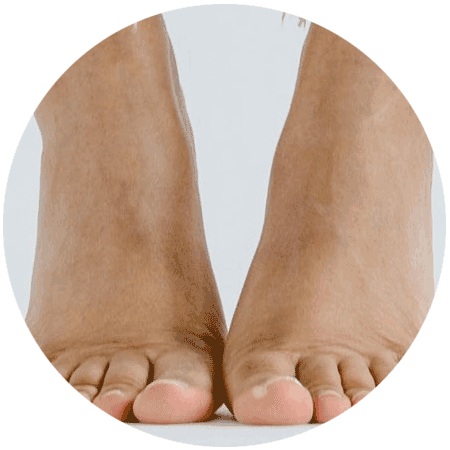
Calluses
Calluses occur when the skin thickens and hardens in response to pressure and friction. They most commonly form on the feet, but can also develop on the hands. They can be troublesome but can be eliminated, although it may take time.
Medicinal foot bath BIOpH+ Footcare has been proven to work after just one week of use.
What are calluses and corns?
A callus is a thickened, hardened area of skin. Long-term pressure or friction on an area of skin causes the skin to thicken. If a callus continues to be stressed or rubbed, a corn can form. It’s common to have slightly pale yellow calluses on the feet, sometimes a little whitish. A corn looks similar to a callus, but has a hard core in the center. Corns are most common on the heels, toes, or balls of the foot.
What happens to your skin when you have calluses?
The skin thickens when it is rubbed and stressed. This is due to a natural defense mechanism, where the skin tries to protect itself against further irritation. The increased mechanical friction on the skin can also make it more vulnerable and susceptible to infections.
Causes of calluses
Calluses develop when the skin is rubbed and stressed excessively in a specific area. Your risk of developing calluses is higher if any of the following apply to you:
- You have a low arch
- You have prominent bunions, hammertoes, or misalignment in your feet or toes
- You have reduced sensation in your feet
- You have toes that rub against each other
- You wear tight-fitting shoes
- You wear socks, shoes, or insoles with rough seams
- You have a job or leisure activity that irritates or stresses the skin
- You do a lot of sports.
Reduced sensation in the feet can be caused by diabetes, for example, which can lead to reduced blood circulation or neuropathy.
Symptoms of calluses
A callus is a thick, hardened area of skin. You can get calluses on your feet and hands. Calluses on the feet are often yellow, unlike dry skin which is normally white, or red if it is irritated.
Calluses - Home Treatment
You can remove a callus on your skin. Most calluses can be treated at home with products available at pharmacies. An important part of treatment is to relieve pressure on the affected area so the skin is no longer exposed to friction and pressure. This can be done in different ways using specially developed plasters and padding.
It’s also important to soften the skin in the affected areas and remove the outermost, hard skin layer. You can read more about how to do this in the next section, Callus Treatment. It’s also good to use various skincare products to keep the skin moisturized and soft.
Callus Treatment
The treatment of calluses primarily focuses on dissolving the hard skin. This can be done in different ways using the following types of products:
- Topical treatment: Salicylic acid is a substance that softens the top layer of skin and is available as an ointment, solution, and in plasters that are applied to the callus.
- Medicinal foot bath: A medicinal foot bath is a foot bath where a special granulate is dissolved in water, which has a softening and exfoliating effect. This means that the hard skin is dissolved and the remaining skin becomes softer. The foot bath also cleanses the skin and is a great way to treat the entire foot at once, which is especially beneficial if you have calluses in multiple places. The medicinal foot bath creates an environment on the skin that optimizes the skin’s natural ability to heal and repair itself.
Once the outermost layer of skin has been dissolved, it can then be carefully filed away. Sometimes you can just rub the skin off with your hand. You can also peel the skin off with your hands, but be careful when peeling skin under your feet so you don’t damage the healthy surrounding skin.
If a callus develops into a corn, it can also be treated the same way, by softening the skin and carefully filing it away. In some cases, surgery may be required to remove corns or trim protruding bone spurs that cause the skin to rub.
If you have diabetes or any other condition that affects blood circulation or sensation in your feet, you should consult a healthcare professional before treating calluses and corns.
Preventing Calluses
Consistent foot care with cleansing, exfoliation, and moisturizing helps prevent calluses and other issues. It’s important to keep the skin — the body’s largest organ and first line of defense against infections — healthy so it can perform its function. Washing your feet every day and cleansing the skin is good for long-term foot health and an important part of preventing foot problems. So make sure to thoroughly clean the entire foot, including
- under your feet
- between your toes
- under your nails.
A great way to clean your entire foot at once and soften callus skin at the same time is with a medicinal foot bath. Make sure to then remove dead skin on and under your feet. Moisturizing and softening creams and other foot care products can also help keep the skin soft and supple. If you already have calluses, it’s very important to treat them to prevent corns from forming.
What is a callus?
A callus is an area of skin with thick, hard skin. You can get
- a callus on a toe
- a callus on the top of the foot
- a callus between the toes
- a callus on a finger
- calluses on the hands
What is a corn?
A corn is a callus with a hard core in the center, which can feel like a sharp object pressing into the foot. Corns are most common on the toes or balls of the foot. You can also get a corn between your toes. A lump under the ball of the foot could be a corn, but is more likely a plantar wart. You can get corns as a child, although they are more common in adults.
How do you treat calluses?
You can remove calluses on your feet, although it may take time. A foot callus needs to be softened. You can do this using salicylic acid, which is available in plasters, solution, or ointment. To remove calluses on your feet, there are medicinal foot baths that dissolve old hard skin, soften the underlying skin, and create conditions for the skin to heal and repair itself.
How do you treat a corn?
Treating corns is not very different from treating calluses. Corn treatment also involves softening the skin with salicylic acid or a medicinal foot bath and carefully filing away the dissolved skin as needed. Removing corns can be more difficult, however. Particularly stubborn corns can sometimes be caused by protruding bone spurs that cause the skin over them to rub excessively. To remove these types of corns, you may need surgery to trim away the protruding bone spur.
Do I have calluses, plantar warts, or corns?
A callus usually doesn’t hurt, while a corn feels like a sharp object sticking into the underlying skin when you step on it or when it is subjected to pressure in other ways. Sometimes it can be hard to tell if you have a plantar wart or a corn, but you can distinguish between them based on the following characteristics:
- Warts can grow on any part of the body, while corns primarily occur on the feet
- Corns are more common on and between the toes, while plantar warts more often grow on the heels and balls of the foot
- Corns are solitary, while warts often grow in clusters
- Warts can sometimes have red or black dots, which corns do not have