
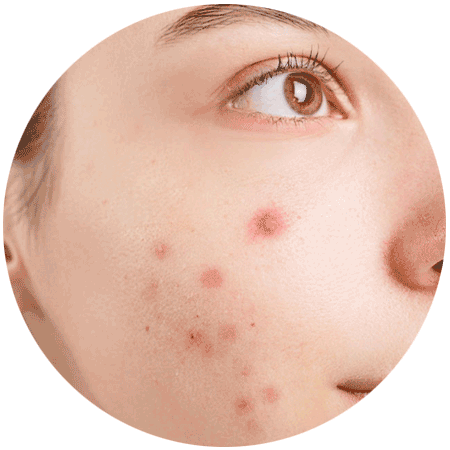
Acne - what is acne?
Acne, also known as spots, is a skin condition that affects most people at some point in their lives. Acne occurs when the sebaceous glands in the skin become inflamed. Factors such as skin type, hormones, and genetic predisposition affect the risk of being affected.
Other factors that affect acne are
- greasy skin products or sun creams
- warm and humid environments
- conditions such as polycystic ovary syndrome (PCOS)
- women's menstrual cycles
- medications containing corticosteroids or lithium
anabolic doping agents.
Acne is common on areas where most of our sebaceous glands are located, such as the face, back, chest, neck, and nape.
The idea that acne spreads between people is a myth. However, it is true that acne is hereditary to some extent. For example, there is a higher risk of developing acne if a parent had acne during their teenage years.
Different types of acne
Acne is divided into three types – mild, moderate, and severe.
Mild acne (Comedonal acne)
The mildest type of acne is characterized by small whiteheads and blackheads. Tender, red spots are uncommon because skin inflammation is minimal.
Moderate acne (Papulopustular)
A somewhat more severe form of acne where the spots are red and raised. The sebaceous glands in the skin are inflamed and appear as typical acne lesions.
Severe acne (Nodulocystic)
The most severe type of acne appears as large, inflamed bumps under the skin. The cysts sit deeper and are painful. If left untreated, this type of acne can cause acne scars.
Milder acne caused by clogged pores can be treated with creams, gels, and BIOpH Acne prone treatment. These are applied or patted onto the affected area and help to open up the pores. This is often the recommended treatment method initially.
If the acne is more severe and does not improve with any of the aforementioned treatments, a course of antibiotics is often prescribed by a healthcare provider. Such a course is often time-limited because long-term use of antibiotics has negative side effects. Acne can also return after completing the course. Therefore, antibiotics should always be combined with creams, gels, or BIOpH Acne prone treatment, which can be used long-term.
When do people get acne?
Acne in teenagers
Acne is common, especially during puberty. More than 90% of teenagers get spots, known as acne vulgaris. Symptoms usually peak between the ages of 15 and 19 and then clear up in the 20s. Almost one-third of all teenagers have severe enough acne to require treatment. Some people feel very unwell due to their symptoms and experience a decline in their quality of life.
Adult acne
Most, but far from all, people outgrow their acne in adulthood. Around 3–5% still have some form of acne in their 40s. Adult acne can be caused by hormonal imbalances, medications, or other factors. The skin condition rosacea is more common in adults and can sometimes be mistaken for acne.
Women can get temporary acne around their period. This can persist well into adulthood. If you are a woman and have irregular periods or increased hair growth, this can also be a sign of a hormonal disorder such as polycystic ovaries (PCO).
What happens to the skin?
Acne is caused by a combination of sebum production, bacteria, and overproduction of skin cells.
The role of the sebaceous glands is to keep the skin soft, supple, and water-repellent. These are mostly located alongside hair follicles on the face, scalp, back, and chest. Sebaceous glands are very sensitive to the hormonal changes that occur during puberty. When sebum production increases, the gland openings become clogged, and sebum, along with skin cells, collects under the skin. This is what is known as blackheads and whiteheads.
There are also bacteria on the skin called Propionibacterium that break down sebum. During this breakdown, irritating substances are released that cause inflammation in the sebaceous gland, known as acne lesions.
How can acne be treated?
There are several things you can do to treat, soothe, and prevent acne. Keep in mind that it can take time before the treatment takes effect.
Washing your face
Use a gentle soap or facial cleanser for oily or acne-prone skin. Washing your face once or twice a day is sufficient.
Treating the skin with, for example, BIOpH Acne prone treatment
Pat the skin with the mixture made of granules and water. Leave it on for at least 30 seconds. Let it dry or rinse it off. The mixture removes what should not be on the skin and creates the best possible conditions for the skin to heal.
Proper Skincare
Moisturize the skin with products tailored for acne-prone skin. Be consistent with your treatment and do not switch products too often. Greasy and oily products can clog the sebaceous glands. Makeup does not cause acne but can worsen symptoms if it contains oils or other fats.
Avoid Squeezing Spots
Mild acne can worsen if you pick and squeeze at your spots. This is because the sebaceous glands are damaged, increasing skin inflammation.
Sun Safely
The sun can help soothe skin inflammation, but be careful. Acne can be worsened by greasy sun creams and sunburn. If you have acne scars and sunbathe, it will take longer for these scars to fade.
The Role of Diet
How much diet affects acne is a debated topic. Some studies have shown that products high in sugar or milk worsen acne. There are also studies showing that the Mediterranean diet has a positive effect. Remember to do what feels best for you.
If you feel unwell or notice that your acne is not improving, seek help. Acne can be treated regardless of severity.